
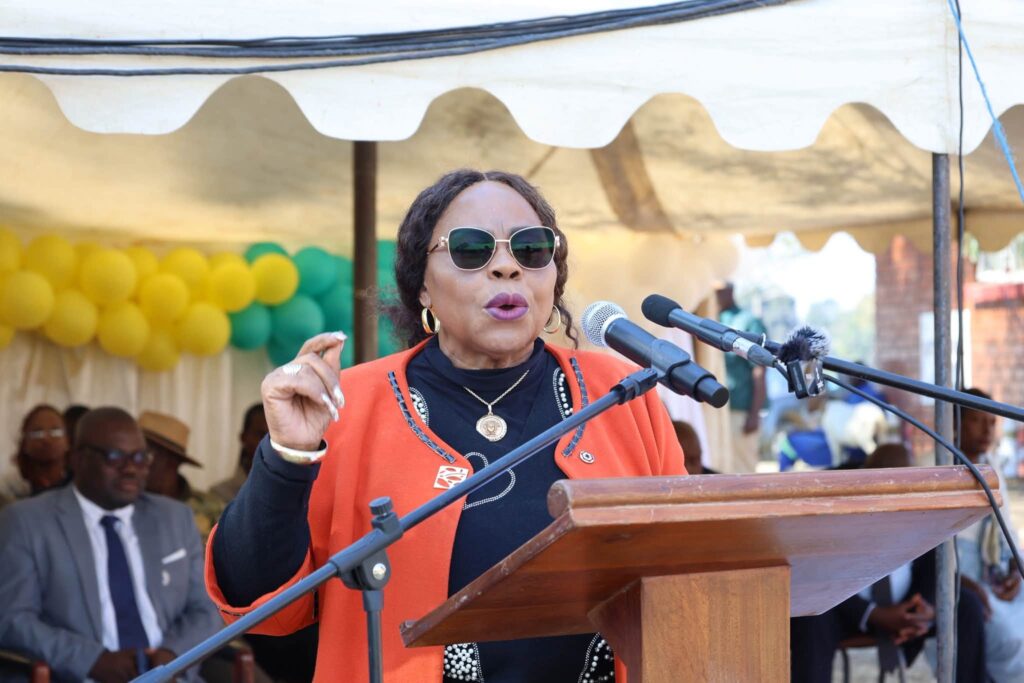
Honourable Minister of Women Affairs, Community, Small and Medium Enterprises Development, Monica Mutsvangwa addresses delegates to the commemorations
The Smallholder Agriculture Cluster Project joined the nation in commemorating the International Women’s Day in Bindura, Mashonaland Central Province. The event ran under the theme, “Rights. Justice. Action. For ALL Women and Girls”.
In her keynote address at the event, the Guest of Honour, Minister of Women Affairs, Community, Small and Medium Enterprises Development, Hon Monica Mutsvangwa said Zimbabwe’s development aspirations under Vision 2030 cannot be achieved without the full participation of women. “This year’s commemoration challenges us to confront the structural inequalities in access to justice that persist in access to land, finance, technology, markets, and leadership. In response, Government continues to strengthen programmes that promote women’s economic empowerment, climate resilience, and technological inclusion”, she said.
Minister Mutsvangwa further called for the inclusion of women in leadership positions across all sectors, where they are expected to shape ground breaking policies, drive innovation and lead organisational transformation. She also urged communities to amplify women’s voices in decision making through ensuring their meaningful participation in governance and policy processes, ensuring that laws, programmes, and investments reflect their lived realities and priorities. The Minister also stressed the importance of securing women’s fundamental economic power by ensuring their equitable access to capital, ownership and industry shaping influence.
Under the Smallholder Agriculture Cluster Project, women account for at least 50% of the 78 240 beneficiaries drawn from its interventions that include mobilisation and funding of Agriculture Producer Groups, Village Business Units as well as small and medium enterprises. One of the strategies for ensuring increased participation of women under SACP interventions has been the Gender Action Learning System, a household methodology that fosters behavioural change, improving relations within the households as well as enhancing the ability to plan livelihoods in general – leading to positive results such as increased savings, smarter investment, better natural resources management and stronger capacity to cope with and mitigate the effects of Climate Change. By empowering individuals and communities, GALS supports sustainable and resilient livelihoods. GALS is not a stand-alone training – it is a delivery method that suits all types of technical interventions and socio-economic contexts. Therefore, GALS works as a development accelerator of different types of interventions and supporting the achievements of development leading to gender equality

