By Chenjerai Shara, District Extension Officer, Murehwa
In 2025, members of Nyamashuka Village came together with a shared vision of improving household incomes and food security. The site allocated for the business unit was a thick bush covered with large trees. Armed only with hand tools, the members worked tirelessly to clear the land, transforming an unproductive area into a productive farming enterprise.
With support from the Smallholder Agriculture Cluster Project (SACP), the group established a Village Business Unit that has since become a source of income, nutrition, and community support.
The project provided the business unit with a 1-hectare starter pack of peas during its first production season in 2025. Although the crop performed poorly due to unfavourable weather conditions. Learning from the experience, the group diversified into maize production and strengthened its marketing skills through the Farmer Market School approach.
Improved Agricultural Production
During the second season in 2025, the business unit cultivated 0.4 hectares of maize, producing approximately 500 dozen green maize cobs and earning net profit of US$2,034. Makaha in Mutoko became their principal market.
In 2026, the group continued expanding production by planting:
- 0.2 hectares of SC727 maize, generating US$313 in net profit.
- 0.2 hectares of Rio Grande tomatoes, which have so far generated US$673 in net sales, with harvesting and marketing still continuing.
- 0.2 of sugar beans generated a net profit of $ US 80.
Improved Household Nutrition
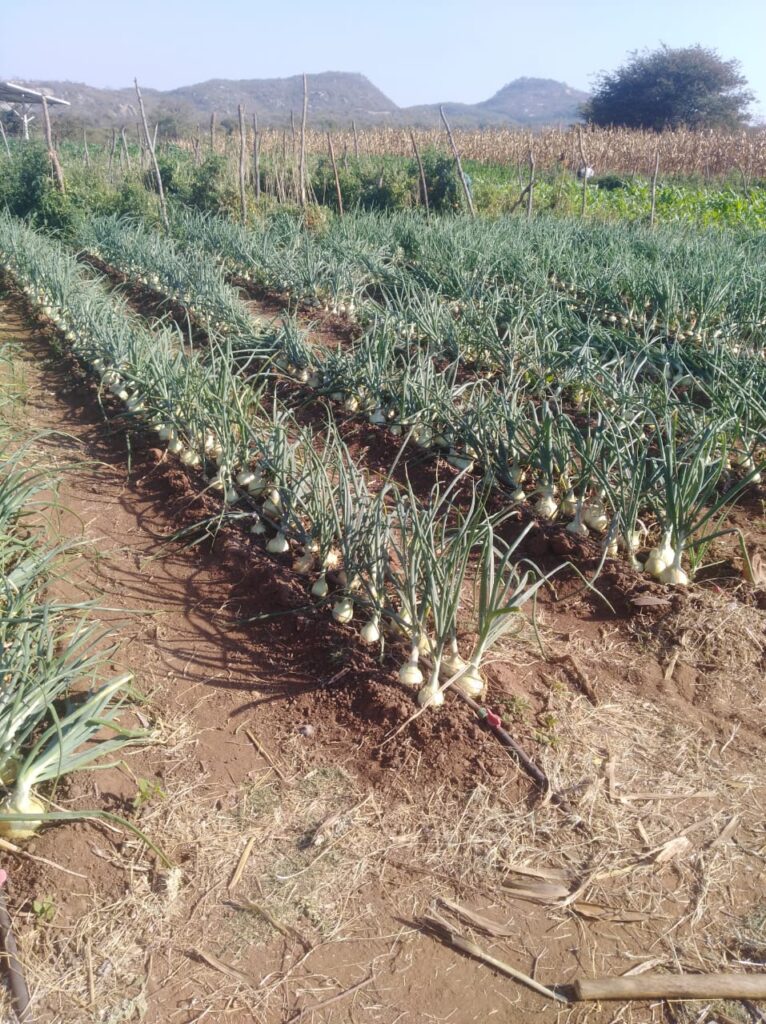
The business unit established a nutrition corner that significantly improved dietary diversity among members. The group successfully produced leafy green vegetables which they harvested continuously for up to eight months. They also cultivated tomatoes, onions and carrots. To reduce post-harvest losses and ensure year-round availability of nutritious foods, members dried surplus vegetables for future household consumption.
The group also generated income through sales from surplus nutrition corner crops which are included covo and rape vegetables and earned US$175. They also earned US$134 from tomato sales.
In order to improve nutrition, the VBU also planted fruit trees that included pawpaws, which they are now harvesting as well as oranges and naartjies.
The farmers at the VBU have managed to purchase inputs and two knapsack sprayers. They have also started contributing towards the construction of an ablution facility in the business unit.