

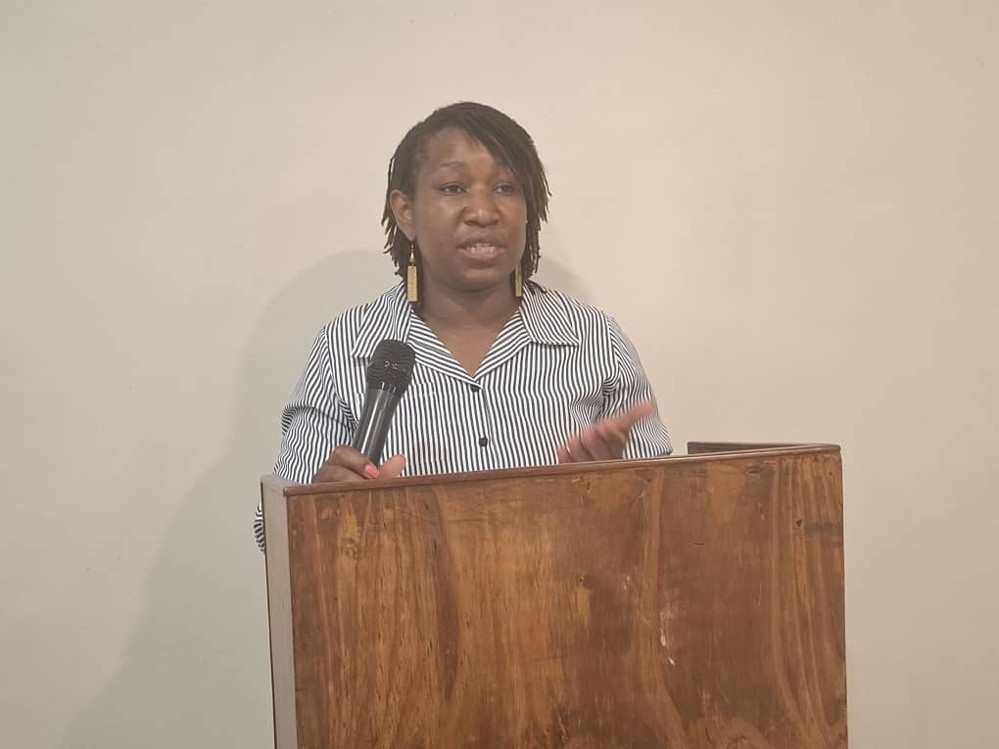
The Smallholder Agriculture Cluster Project (SACP), in partnership with the Ministry of Lands, Agriculture, Fisheries, Water and Rural Development, recently co-hosted a national consultative workshop on farmer group formalisation, bringing together Government officials, development partners, farmer representatives and other key stakeholders to develop a framework that will strengthen and sustain farmer organisations across Zimbabwe.
The national workshop builds on a series of consultations held with smallholder farmers across Matabeleland North, Midlands, Mashonaland West, Mashonaland East and Mashonaland Central provinces. These provincial engagements provided farmers with an opportunity to share their experiences, challenges and expectations regarding the formalisation of farmer groups, ensuring that the national framework reflects the realities on the ground.
Officially opening the workshop, the Ministry’s Director for Strategic Policy, Monitoring and Evaluation, Mrs Louisa Makumbe, said the consultation comes at a critical time as Zimbabwe seeks to strengthen the organisation, voice and sustainability of smallholder farmers, who remain at the centre of the country’s agricultural transformation agenda.
“This gathering comes at a critical time when we are working to strengthen the organisation, voice and sustainability of our farmers, particularly smallholder farmers who remain central to our agricultural transformation agenda,” she said.
Mrs Makumbe noted that organised farmer groups are essential for improving agricultural productivity and enhancing farmers’ participation in competitive markets.
“Farmer groups play a vital role in improving production, enhancing market access, facilitating training, strengthening bargaining power and enabling participation in value chains. However, many of these groups operate informally, which limits their ability to enter contracts, access finance, qualify for support programmes and engage fully with markets and institutions. Formalisation therefore is not just an administrative exercise; it is a strategic step toward empowerment, accountability and long-term resilience.”
She highlighted the numerous opportunities that formalised farmer organisations can unlock, including improved access to markets, financial services and development support. Formalised groups are better positioned to negotiate favourable market terms, open and manage bank accounts transparently, sign legally binding contracts, participate in structured value chains, access Government programmes and extension services, and build credibility with financial institutions, private sector companies and development partners.
Mrs Makumbe, however, stressed that the process of formalisation must remain accessible to all farmers.
“Formalisation must be affordable, simple and farmer-friendly. If registration processes are too costly, complex or centralised, they may exclude the very farmers we seek to support. Our policy recommendations must therefore balance regulation with inclusiveness.”
The consultative workshop provides a platform for stakeholders to review existing legal and institutional frameworks, identify barriers to farmer group registration and develop practical recommendations that will support an inclusive, efficient and sustainable formalisation process.
For SACP, farmer group formalisation is a critical step towards building strong, market-oriented farmer organisations capable of driving inclusive agricultural growth. Formalised groups are better equipped to attract investment, access finance, strengthen governance and forge lasting partnerships with buyers and other value chain actors, ultimately improving the livelihoods and resilience of Zimbabwe’s smallholder farmers.
The recommendations emerging from the national consultation are expected to inform policy and guide the development of a farmer-friendly framework that supports the growth of vibrant, commercially viable farmer organisations capable of contributing to Zimbabwe’s agricultural transformation and rural development.

