


The International Fund for International Development says that funding of the Agro EcoNUS+ is a sign of its continued commitment to the development of rural communities in Zimbabwe.
In a speech read on his behalf by the Country Liaison Officer for Zimbabwe, Ms Joylyn Ndoro, the Country Director for Zimbabwe and Eswatini, Mr Francesco Rispoli said the new project, which will be implemented in Binga, Lupane and Hwange will complement and strengthen the Smallholder Agriculture Cluster Project (SACP), financed by the Government of Zimbabwe, IFAD and the OPEC Fund for International Development.
He said, “AgrEcoNUS+ reflects IFAD’s continued commitment to Zimbabwe’s rural communities. It will support farmers in Hwange, Binga and Lupane to build more resilient, sustainable and inclusive agri-food systems — through agroecology, neglected and underutilized species, and farmer-managed seed systems. While SACP strengthens household incomes and nutrition by organizing smallholder farmers into Agriculture Producer Groups and Village Business Units within climate-smart, market-oriented value chains, AgrEcoNUS+ brings specialized expertise in agroecology. This is the strength of the partnership: AgrEcoNUS+ brings technical innovations, while SACP provides community-based farmer platforms, infrastructure and market linkages. Together, they can achieve greater impact.”
Speaking at the same event, Italian Ambassador to Zimbabwe, Mr Giuseppe Giacalone noted that the project would focus on Neglected and Under-utilised Crops (NUS). He said, “ At the heart of this project is a simple but powerful idea: crops too often overlooked—millets, sorghum, Bambara nut, African pea and amaranth—have nourished communities for generations and can support healthier diets, richer biodiversity and greater climate resilience.”
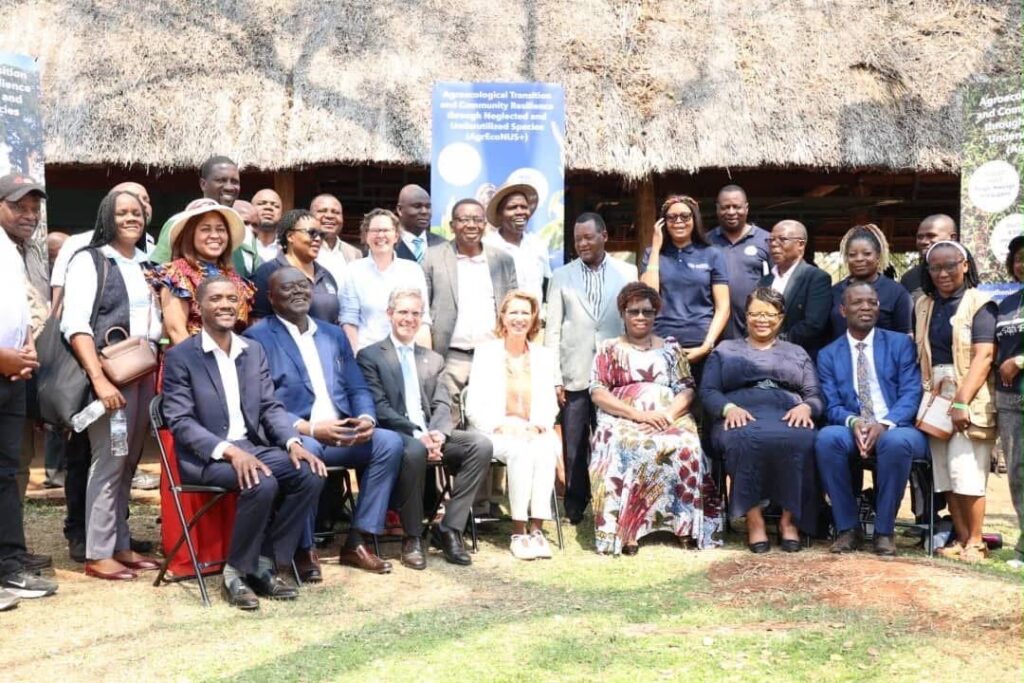
The project is running from January 2026 and will be completed in December 2028. It is implemented by CTDO, the Fambidzanai Permaculture Centre, Bio-Innovation Zimbabwe and ICRISAT. The deliverables under the project include the establishment of fifteen Agroecology Village Business Units established benefitting an estimated 4,500 farming household.

