

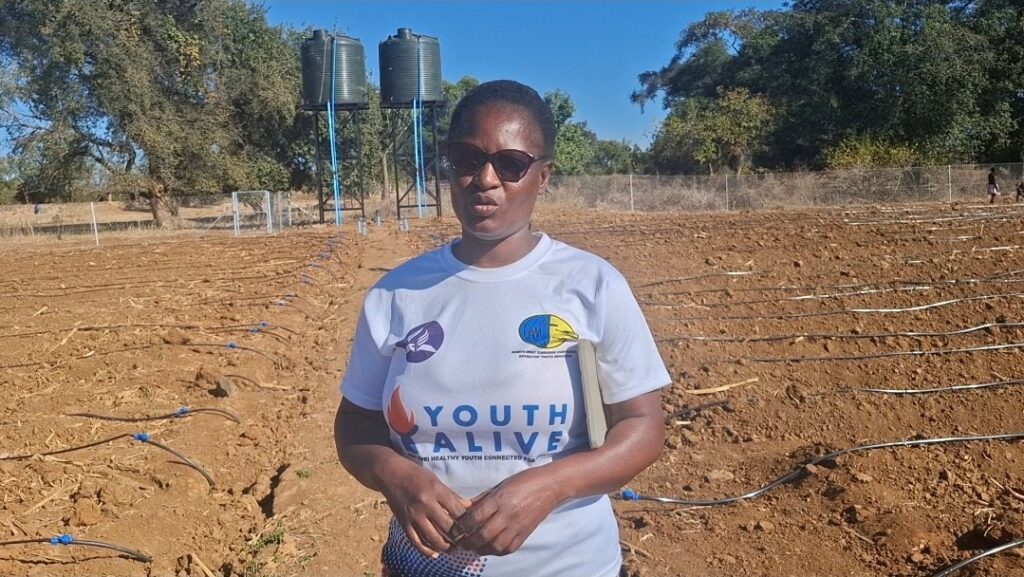
Melody Nzuma, SBU representative for Kundai Primary School Business Unit
The Smallholder Agriculture Cluster Project has started establishing School and Youth Business Units across the 5 provinces where it is operating. The 23 school business units and the 6 youth business units bring the total number of business units established by the project to 100.Districts that benefitted under Youth Business Units include Mhondoro Ngezi, Chirumhanzu, Uzumba Maramba Pfungwe and Mutoko. The 23 School Business Units are spread across 6 districts that include, Mhondoro Ngezi, Sanyati, Chirumhanzu, Uzumba Maramba Pfungwe, Hwange and Lupane.
Work to establish the school and youth business units began in April this year. Youth Business Units were established. The units are at various stages of completion with some still doing land preparation while others have started production.
Ms Melody Nzuma, the School Business Unit representative for Kundai School Business Unit in Mhondoro Ngezi said, “As a school, we have an enrolment of 332 pupils and 14 teachers. Our garden is 1, 5 hectares in size with 1 hectare set aside for commercial use while the remaining 0, 5 hectares being used as a nutrition corner. The commercial side is run by the Scholl Development Committee with support from the community. The nutrition corner is managed by community members, from the 10 villages, especially those whose children are pupils in this school. We previously had a small garden which was less than an acre. We were only able to cultivate 1 bed for each crop, and we concentrated on leafy green vegetables, tomatoes and onions. Staff members also used to same portion to grow their vegetables.
We are especially pleased with the nutrition corner because we are receiving grain from the government. The nutrition corner compliments government efforts as it will enable us to grow vegetables for relish for the pupils. This means our pupils will get a hot meal t school on a daily basis. The establishment of this School Business Unit has come at the right time as we were now losing pupils to newly established private schools in the area. Some of the pupils have been re-enrolled into the school from the private schools they were now attending.
The water troughs for livestock have also assisted the community as their cattle no longer go to disused mining pits to look for water. As a result the number of cattle falling into these pits has reduced as livestock can now be watered here.
We have not started cultivation as we have just completed land preparation and we are purchasing inputs for this portion. We have plans to plant 30 000 onion plants, 16 000 cabbage plants. From the proceeds, we have agreed to establish a poultry and a goat project to improve the pupils’ diet and earn an income for the school.
Our pupils are paying US$31 per pupil and we hope the income from the garden will enable the school to reduce school fees to between US$15 and US$20 per child as the school will now be sustained by the project.
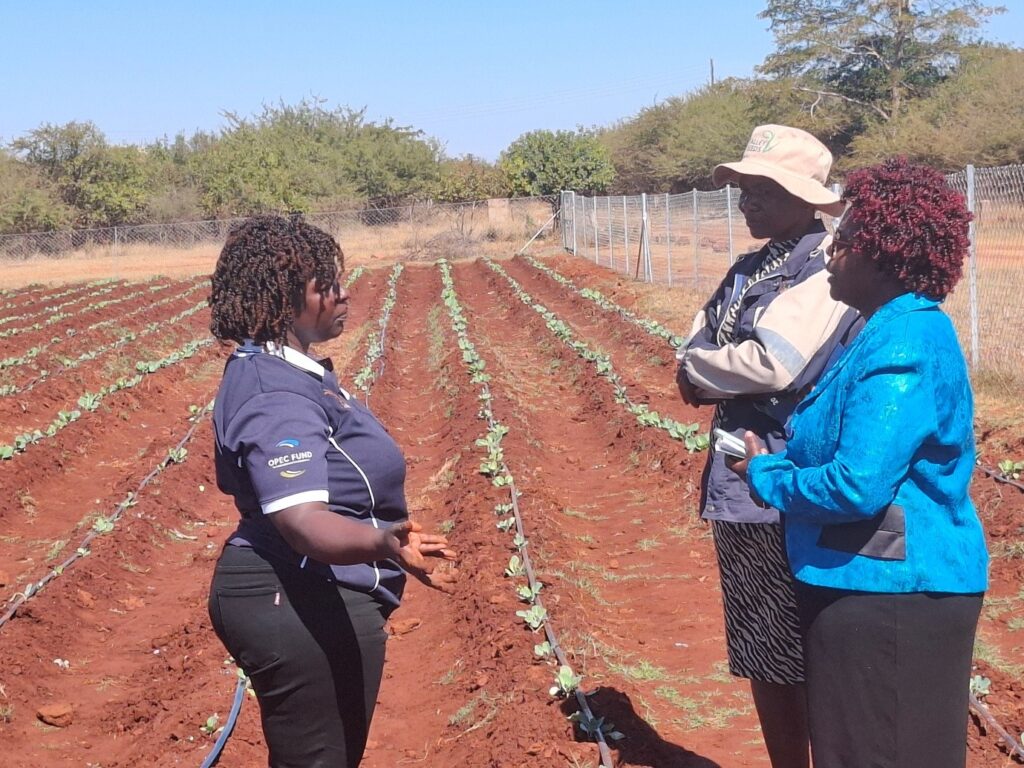
SACP Climate Smart Agriculture specialist, Ottilia Mabvongwe discusses the progress in the Bumbe School Business Unit with the SBU Representative , Sandra Runganga and the local Agriculture Business Advisory Officer for the ward.

