

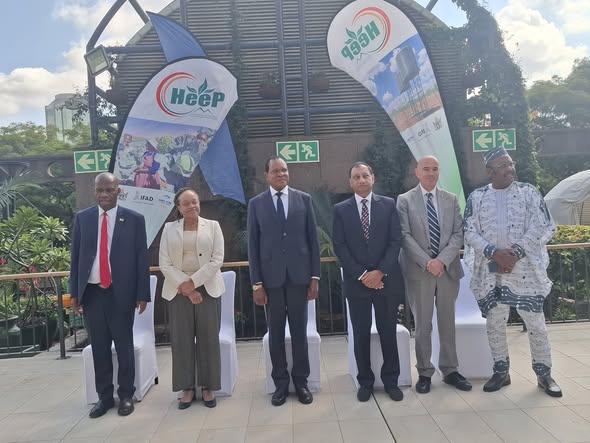
The Smallholder Agriculture Cluster Project (SACP) joined Government, the International Fund for Agricultural Development (IFAD) and development partners at a dissemination workshop for the 2025 IFAD Country Strategy and Programme Evaluation (CSPE) held in May. The event represents an important milestone that will shape the future of IFAD’s partnership with Zimbabwe.
Conducted by the IFAD Independent Office of Evaluation, the assessment reviewed IFAD-supported interventions implemented between 2016 and 2025 under a total investment of US$187.7 million. The evaluation covered three flagship projects, the Smallholder Irrigation Revitalisation Programme (SIRP), the Smallholder Agriculture Cluster Project (SACP) and the Horticulture Enterprise Enhancement Project (HEEP).
The evaluation assessed the relevance, effectiveness, efficiency, impact and sustainability of the IFAD portfolio, while documenting lessons and recommendations to inform the design of the next IFAD Country Strategic Opportunities Programme for Zimbabwe.
Officially opening the dissemination workshop, the Minister of Lands, Agriculture, Fisheries, Water and Rural Development, Dr. Anxious Masuka, said the evaluation provides an opportunity for Government and its partners to reflect on achievements, address emerging challenges and strengthen future investments in rural development.
“We are gathered to discuss the findings of this evaluation, to identify together the opportunities and challenges, and to highlight Government’s strategic priorities for IFAD’s next country programme. This is IFAD’s constituency and the Zimbabwe Government’s main focus for rural transformation,” said Dr. Masuka.
He stressed that evaluation is a critical tool for learning and improving development outcomes.
“Evaluation is not merely an accountability exercise. It is a strategic learning instrument. It allows us to reflect honestly on what has worked well, what has not worked sufficiently, and what must be improved going forward. The findings and recommendations emerging from this evaluation should therefore guide the design of the next phase of cooperation between the Government of Zimbabwe and IFAD.”
SACP is supporting 78 240 smallholder farmers to transition from subsistence farming to commercially oriented agriculture by rehabilitating irrigation schemes, strengthening farmer organizations, promoting climate-smart production practices, improving access to markets and finance, and fostering productive partnerships with the private sector.
The dissemination workshop provided an opportunity for Government, IFAD, implementing partners and other stakeholders to reflect on the portfolio’s achievements and lessons, while identifying strategic priorities for the next phase of collaboration. The recommendations from the evaluation will contribute to strengthening future investments that improve rural livelihoods, enhance agricultural productivity and build resilient, inclusive and market-oriented food systems in Zimbabwe.

