

The International Fund for Agricultural Development (IFAD) has allocated US$35 million to Zimbabwe under its IFAD13 financing cycle. The organisation which also co-finances the Smallholder Agriculture Cluster Project in partnership with the Government of Zimbabwe and the The OPEC Fund for International Development, will use the funds scale up and expand climate-smart agriculture and livestock development under the Village Business Unit model, creating greater opportunities for youth entrepreneurship in agri-food systems, promoting nutrition-sensitive agriculture and food systems, and advancing gender equality and women’s empowerment as cross-cutting priorities.
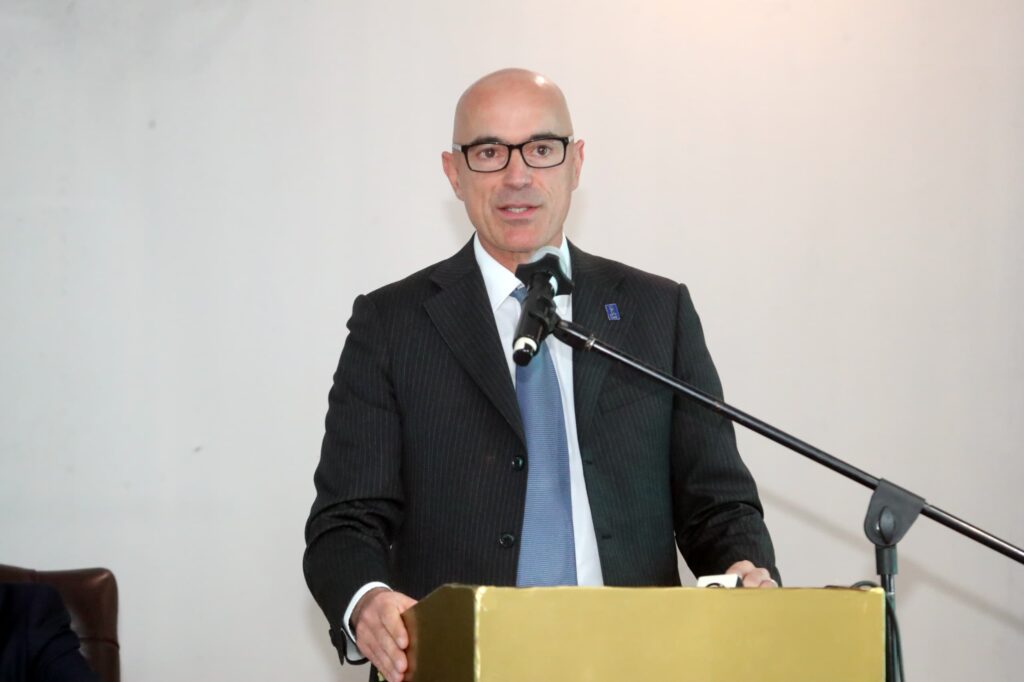
In a speech read on his behalf by the IFAD Zimbabwe Country Liaison Officer, Ms Joylyn Ndoro, at the recently held belated World Food Day celebrations held at Matopos Research Institute in Matabeleland South Province, International Fund for Agricultural Development (IFAD) Country Director for Zimbabwe and Eswatini, Mr Francesco Rispoli, said, “IFAD has been investing in rural economies and food systems in Zimbabwe since 1980, supporting eight development projects with a total investment amounting to almost 400 million USD. Our investments have been aimed at improving the livelihoods and resilience of poor rural populations through inclusive, sustainable and climate smart interventions.”
The organisation has supported several projects, that aim to build climate resilience among smallholder farmers including the recently completed Smallholder Irrigation Revitalisation Programme which rehabilitated 5200 hectares in communal irrigation schemes in Manicaland, Midlands, Masvingo and Matabeleland South, reaching out to 35000 smallholder farmers with women accounting for 50% of beneficiaries and youth for 30%.
IFAD is also co-financing the Smallholder Agriculture Cluster Project (SACP) which ends in 2027. The project is reaching out to smallholder farmers in Mashonaland East, Mashonaland West, Mashonaland Central, Matabeleland North and Midlands provinces and aims to support 800 Agriculture Producer Groups (APGs) and link them to 200 small and medium enterprises and 40 Value Chain Lead Enterprises to promote viable, market led production. Mr Rispoli added that “The development of climate smart infrastructure remains a priority and under SACP we are developing and climate proofing 1780 hectares that are being brought under irrigation, establishing 100 Village Business Units and rehabilitating 89 km of last mile feeder roads. Through this intervention we are reaching out to 78 200 households.”
A third project, the Horticulture Enterprise Enhancement Project (HEEP) was recently launched in June 2025 and has a total investment of with a total investment of USD 66.55 million. “HEEP aims to increase incomes, food security, and empowerment of smallholder farmers engaged in profitable, sustainable horticulture value chains. Like its sister project, SACP, the project also emphasises the participation of women and youth, while also focusing on nutrition, climate change, and environment, More importantly, HEEP is promoting a Public-Private-Producer Partnerships model, which aims to broker mutually beneficial partnerships between the public sector, the private sector and smallholder producers, with the objective of driving inclusive horticulture value chain development. HEEP will also leverage leveraging previous investments like the Smallholder Irrigation Revitalization Programme (SIRP) and the Smallholder Agriculture Cluster Project (SACP)”, said Rispoli.
The celebrations ran under the theme “Better food and a better future”. The Guest of Honour, the Minister of Lands, Agriculture, Fisheries and Rural Development, Dr Anxious Jongwe Masuka was represented by his Permanent Secretary, Prof Obert Jiri.

